
Secure GDPR-compliant cloud: storing your data in full compliance

Quick reply
Data location, encryption, traceability: the GDPR requirements to check with your cloud host and what non-compliance costs.



Store your data in a cloud that guarantees GDPR compliance
GDPR is not just an acronym to tuck away in a corner of your privacy policy. For any company that processes personal data, it is an essential framework that imposes specific obligations regarding the protection, processing, and management of sensitive information. In a world where cloud services are becoming the backbone of IT systems, GDPR compliance can no longer be considered optional. It is the guarantee that the personal data of customers, employees, and partners is secure, stored responsibly, and handled according to strict standards.
Why is GDPR compliance crucial for cloud storage?
The challenges of GDPR for businesses
The GDPR (General Data Protection Regulation) applies to all companies that process the personal data of European citizens. This includes small businesses, SMEs, mid-sized companies, and large corporations alike. This regulation governs the collection, processing, and online storage and use of this information. It requires companies to document data processing activities, ensure protection through technical and organizational measures, and allow individuals to exercise their rights.
Companies using cloud services must therefore verify that their providers meet all GDPR requirements. This is particularly important regarding data storage location, access confidentiality, and the security guarantees in place. A non-compliant cloud provider can jeopardize an entire company's data protection strategy.
The risks of non-compliance
Failing to meet GDPR obligations can have severe consequences for businesses. Financial penalties can reach up to 20 million euros or 4% of total annual global turnover. Beyond the financial aspect, there is a major impact on reputation. A poorly managed data breach can lead to a massive loss of trust from both customers and partners.
Furthermore, supervisory authorities, such as the CNIL in France, are conducting increasingly frequent audits and targeting companies that cannot justify sufficient compliance measures. Adopting a GDPR-compliant cloud with enhanced security measures helps mitigate these risks. The key challenge is also to anticipate the demands of regulators.
The role of the cloud in protecting personal data
As the central infrastructure for digital transformation, the cloud manages growing volumes of data. For a company to use the cloud while remaining GDPR-compliant, it must choose a solution that offers transparency, traceability, and security throughout the entire personal data lifecycle. This includes encryption mechanisms, control over data location, access rights management, and the ability to delete data upon request.
A GDPR-compliant cloud thus becomes an ally for companies committed to protecting their customers' sensitive information while gaining agility in data management and processing. It allows for the delegation of certain operations while maintaining full control over confidentiality and security.
What are the GDPR requirements for data storage?
Data localization and transfer outside the EU
The GDPR requires that the personal data of European residents not be stored or processed outside the European Union without appropriate safeguards. This poses a particular challenge for companies using cloud services from American providers and vendors like Google or AWS, which are subject to extraterritorial laws such as the Cloud Act or FISA.
Choosing a sovereign cloud, which guarantees that data is stored in France or Europe, is a mark of compliance. This type of solution makes it possible to adhere to regulations by limiting the risks of illicit transfers of sensitive or personal data. It is essential to contractually verify storage locations and ensure that the provider implements legal and technical measures that guarantee data confidentiality.
Security, encryption, and pseudonymization
Article 32 of the GDPR stipulates that organizations must ensure a level of security appropriate to the risks involved.
This includes measures such as data encryption, pseudonymization, system resilience, and the ability to quickly restore information in the event of an incident. The cloud must therefore natively offer these features to ensure optimal protection.
Beyond technical tools, it is essential to be able to control access rights, monitor activity logs, and detect any abnormal behavior. Security is not limited to a firewall or antivirus! It is a complete ecosystem of measures, alerts, identity management, and user training.
Traceability and data access
Traceability is a key requirement of the GDPR. A responsible company must be able to provide, at any time, a detailed view of the processing performed on personal data. This implies having audit systems, log management, and access control in place.
A compliant cloud offers this total visibility: who accessed what information? When? Under what circumstances? This transparency is essential for proving compliance during an audit, as well as for reacting effectively in the event of a data breach.
Secure GDPR-compliant cloud: what are the benefits for your company?
Reduction of legal risks
By choosing a cloud specifically designed to meet GDPR obligations, organizations significantly reduce their exposure to legal risks. This involves localized storage, comprehensive documentation of processing activities, and rigorous management of access and retention periods. The company can demonstrate its accountability and due diligence, which is crucial in the event of an audit or complaint.
Improving customer trust
Customer trust increasingly depends on how their personal information is managed. Showing that your company uses a GDPR-compliant cloud with rigorous protection measures strengthens the customer relationship. It is also a strong marketing argument, particularly in sectors where privacy is seen as a key selection criterion.
Furthermore, choosing a cloud that offers full customization of your collaborative platform is a sign of professionalism.
In addition to the security aspect of cloud applications, a customized interface is a real advantage. Compliance and brand image: your company stands out as a committed, professional, and trusted player.
Simplified compliance management
A well-designed GDPR cloud natively integrates advanced features to centralize and oversee all personal data processing. This includes dynamic processing maps, comprehensive logs, exportable audit reports, and automated alerts in the event of detected anomalies or non-compliance.
The management of access rights, retention periods, and user consent can also be automated, which considerably simplifies the work of data controllers and DPOs. They have a global, real-time view of the compliance status across the entire organization. They can thus make decisions based on reliable, traceable, and contextualized data.
By opting for a secure, GDPR-compliant cloud, you gain operational efficiency while reducing the time spent on complex administrative tasks. NetExplorer cloud solutions, for example, go further. They offer a true compliance dashboard capable of cross-referencing hundreds of IT flows, tracking regulatory changes, and automatically adapting security and processing measures accordingly. This turns compliance from a hurdle into a driver of performance and trust.
Our solutions: a secure, 100% GDPR-compliant cloud
Key features and security measures
Our solutions French cloud have been developed to ensure optimal protection of personal data. We offer 100% sovereign storage, certified data centers, end-to-end encryption, and advanced access control measures. Every company retains full control over its information, with comprehensive activity tracking. At NetExplorer, we value a secure file sharing solution that is GDPR and HDS compliant, and currently undergoing SecNumCloud qualification.
Compliance support
Our experts assist IT managers and DPOs with GDPR compliance: processing analysis, personalized recommendations, register templates, and retention period configuration. We simplify compliance management and provide practical advice to strengthen data security and protection.
Use cases and client testimonials
Many companies in demanding sectors such as healthcare, finance, transport, industry, and the public sector trust our sovereign, GDPR-compliant cloud solutions for processing and storing their personal and sensitive data. Within a strictly European framework, and in compliance with CNIL recommendations and the highest security standards, NetExplorer implements measures such as data encryption, full control over hosting, and the absence of transfers to third countries subject to the Cloud Act.
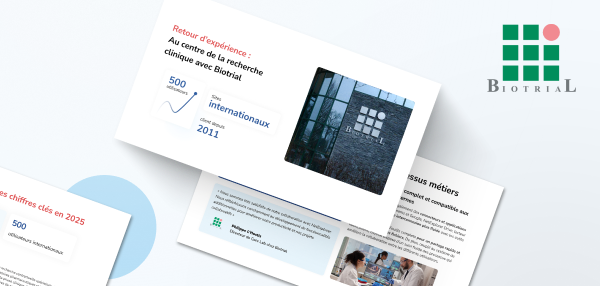
Whether for managing confidential projects, processing HR data, centralizing technical documents, or protecting highly strategic files, our clients highlight the ease of use, technical robustness, and level of control offered by our service.
With a 96% recommendation rate, our clients attest to the tangible impact NetExplorer has on the confidentiality and protection of their data. From industrial suppliers to public organizations, each use case illustrates how we help managers and processors meet their regulatory and operational requirements while limiting IT security risks.
Discover all our use cases and client testimonials that reflect our commitment to providing reliable, high-performance services that comply with the clauses and rights governing data processing.
Other articles you might like
SecNumCloud, ISO 27001, HDS: what are the differences?
ISO 27001, HDS, SecNumCloud: the question each standard answers, what it really covers, and which one to aim for in your sector.




But let's be honest, our cloud-based file storage and sharing solution is much easier.